
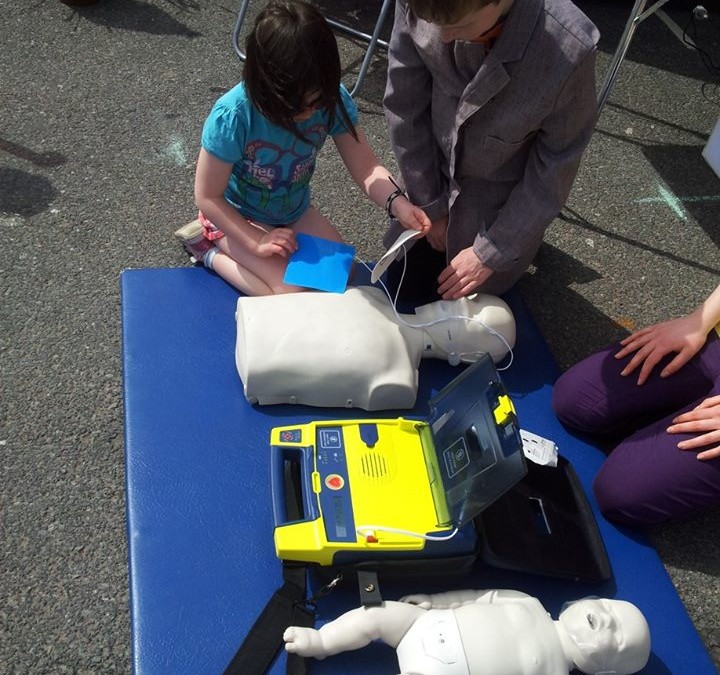
First Aid saves lives, so why don’t we learn First Aid? For some of you reading this blog you learn first aid or resuscitation because it’s a mandatory part of your Continuing Professional Development. However, it’s reported that three-quarters of people in the UK don’t know basic first aid. The research shows that resuscitation (CPR) and the use of an automated external defibrillator saves lives.
In Seattle where they teach first aid in school their survival rate from cardiac arrest is 56%. Sadly we have low numbers of bystander CPR in the UK and as a consequence more people die from cardiac arrest than necessary, our survival rate is less than 10%.
So why don’t people learn First Aid?
There are lots of reasons why people don’t learn first aid:-
- lack of interest
- lack of time
- inconvenience of leaving house
- cost
- inability to find a course
- fear of contracting HIV
- fear of being sued
- bad health/physical limitations
(ref:- literature review)
I’d like to add to this list that we think and hope it will never happen to us. However, it does happen. I’m always amazed at the numbers of people on my courses who have a personal story to tell either someone’s witnessed a collapse, someone choking (often their own child or relative) or an accident. There are always stories in the press about people being saved by a stranger.
I think we worry about getting it wrong or having to actually get involved. I think we worry that we won’t be able to cope and if we don’t know what to do then we don’t have to get involved. A good trainer will help to allay these fears. Even the most experienced want to do their best, I always teach that it’s better to do something than nothing.
Learning first aid doesn’t have to take a long time either. There are short courses that are maybe 2 hours long and are delivered free by either charities or organisations such as the British Heart Foundation or companies such as myself that are keen to put something back into their community. I will even come to your house if you have enough room! I will come to school and teach the students for free too.

If you would prefer or need a certificated first aid course I have started working in partnership with Gateway Workshops to provide First Aid courses in Manchester. If you need something closer to your location please contact me.
There are often concerns about contracting HIV. For this I remind people that you are far more likely to encounter an event at home than anywhere else, unless you work in an area with unwell people. The risk of contracting infections from performing CPR has been shown to be very low. You can purchase pouches with face shields and gloves and the guidelines from the Resuscitation Council say clearly if you are unwilling or unable to give mouth-to-mouth then provide compression only CPR. It is better to do something than nothing.
Often I’m asked on courses about the issue of being sued. In the UK we don’t have a Good Samaritan law but the courts look favourably on someone who has acted within the remits of their knowledge and skill and in the best interest of the victim. In court the victim would have to demonstrate that their condition is worse for someone having performed CPR. Without CPR they would’ve died so this is extremely difficult to demonstrate.
A good trainer should allay any fears and allow enough time to practice that you develop the skills and the confidence that should you need your skills you’ll remember. This is what I always try to do and I try to make it fun. I receive excellent feedback from my learners.
The last item listed above of physical health limitations is also not insurmountable. With regard to health problems even when delivering an Ofqual regulated course or Resuscitation Council course there is the ability to make reasonable adjustments if someone has a disability which makes the practise of some of the skills difficult. You just need to contact your instructor prior to the course and inform them of your needs. You can contact me at Helen@orchardtrainingservices.co.uk. In a real situation you are expected to maintain your own safety and not injure yourself, therefore if necessary you can instruct others if you’re not able to perform particular tasks.
I think the other problem not cited here is that as adults we often fear having to perform in public and this being a practical skill will involve practise in front of others. Yes you need to practise in a room often with other people as part of your learning. This is however to ensure that you develop the key skills and knowledge. On my courses I try to make sure that groups sharing a manikin are no more than 3 and mostly just pairs. This enables you to support and guide each other. Also if you arrange a ‘Save a Life party’ then you will be with people you know.
With greater numbers of people trained in first aid then we could save more lives and foster more of an interest in learning first aid in our children, what a wonderful thing that would be.
To find out more please contact me.
Great article and First Aid Training should be made compulsory for everyone – especially in these times.
Thank you for your comment; I’m glad you enjoyed the blog.
Kind regards
Helen