
First Aid for Stroke Victims
The initial approach to First Aid for Stroke victims is no different to any other emergency. We always think about DRABC. However, it’s worth considering if there are any likely differences or things to be prepared for.
Danger
It’s important to make sure that you don’t injure yourself in an attempt to help someone else. The level of danger to yourself will depend on the environment that you’re in. It is also worth considering the space you have around you as stroke victims may become unconscious and therefore need to be laid onto their side.
Response
The question we are asking here is are they conscious or unconscious. If they’re conscious then we can consider FAST, which I’ve discussed below. If they’re unconscious then we need to open their airway.
Airway
When someone is unconscious and lying on their back the tongue can fall back and block the airway making it impossible for the person to breath. To open someone’s airway we do what is called a ‘head tilt and chin lift’ manoeuvre. This has the effect of moving the tongue forward to clear the airway. It’s important to remember that noisy breathing, such as snoring, can indicate a partially obstructed airway. Once we’re sure the airway is open then we can check for breathing. When someone has a stroke their airway may be at risk because of potential loss of muscle control.
Breathing
Normal breathing is quiet and rhythmical. If we’re not sure that they’re breathing normally with an open airway then we need to start CPR.
If someone is unconscious and breathing then we can put them into the recovery position. You can see this in this video from the British Heart Foundation or in the Lifesaver interactive video.
Circulation
Once satisfied that someone is breathing adequately then we can consider Circulation. Strokes are a circulation problem as the blood supply to the brain is disrupted either by a clot or by a bleed.
There has been some research conducted in recent years in rats about stimulation immediately after a stroke. Dr. Ron Frostig has found that rats that were stimulated by touch (whisker twisting) had a much better recovery than those that didn’t and those that received this stimulation within the first hour also did better. I haven’t been able to find any research that has been conducted in humans so if anyone knows of any please share it in the comments below, I’d be happy to read it.
I’ve been asked a few times about this during training and as it’s unlikely to do any harm I wouldn’t see anything wrong in trying it but as I said above I haven’t been able to find any research detailing its usefulness in humans.
How to know if someone is having a Stroke
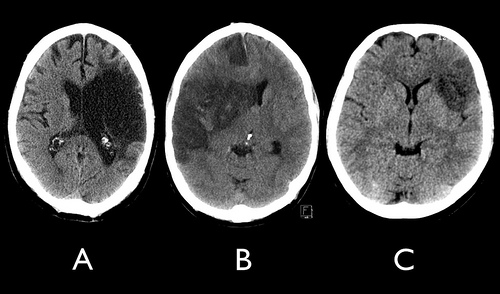
The treatment available for Strokes is a clot busting medicine called ‘tpa’ for short. There is however a time frame to administer it and it’s only useful if the stroke is caused by a clot as opposed to a bleed. This means that the person needs to have a scan to determine the cause prior to treatment. Therefore it’s important that the possibility of a stroke is considered and this is where the actFAST campaign is so useful.
actFAST
The actFAST campaign has been shown on national television and I find that most people have heard of it when I refer to it. So what does it stand for?
F – Face, is their face even or does it look drooped on one side.
A – Arms, can they hold their arms up to shoulder height and keep them level or is one side weaker than the other.
S – Speech, is their speech normal or is it slurred or can they smile.
T- Time, think about acting FAST so they get the treatment they need quickly. I’ve also seen ‘tongue’ added in here, which is useful for the dentists I teach but it’s important to keep in mind that there is a ‘window of opportunity’ for the treatment.
If you think someone is having a stroke
Phone 999 or 112 for an ambulance. Tell them that you think they may be having a stroke. Be prepared to put them in the recovery position if they become unconscious. As discussed above although I couldn’t find any human studies it’s unlikely to any harm to touch their face and fingers as a way to provide stimulation. I’m also sometimes asked about giving aspirin for a stroke, this isn’t to be recommended in case the cause is a bleed and not a clot.
Make sure you’re ready for the ambulance arriving, send someone to wait for them at the door or on the street so they can be guided to you as quickly as possible. I’ve discussed more about being ready for your help in one of my previous blogs.
I hope you found this useful. If anyone knows of any human studies about the effectiveness of stimulation please share it or any other comments below.
Photo Credit: Radiology Signs via Compfight cc
Recent Comments